


On February 6, 2026 at the Patriarchal Cathedral of Bucharest, the general proclamation was given of the canonisation of sixteen holy women, referring to them as “spiritual mothers of the Romanian people”.
At the proclamation, His Beatitude Patriarch Daniel delivered an address, stating, “The 16 Romanian holy women, canonised in 2025 and proclaimed today in the Patriarchal Cathedral in Bucharest, are important spiritual landmarks from the historical past of the Romanian Orthodox Church, showing us, as spiritual mothers of the Romanian people, the path that leads to Christ.
”They sanctified their lives through humility and love for others, through strong faith and the courage of confession, through patient endurance of trials, through ascetic struggle and prayer.
“Thus, the faithful people have honoured with great devotion the long-suffering women martyrs, the zealous women monastics, the Christ-loving noble ladies and princesses, the devout mothers and the prayerful women of the people, who lived with humility and unwavering faith, overcoming the trials of their times and shining today like stars that show us the way to Christ, the Sun of righteousness.”
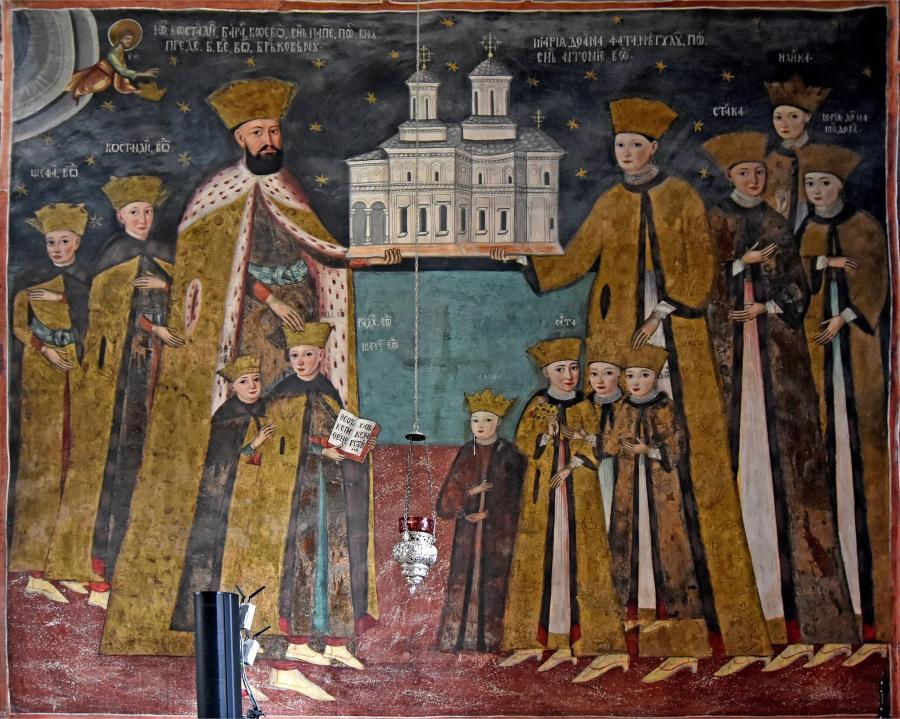
Among the 16 women canonized was Princess Maria Brâncoveanu (1661–1729), wife of the Holy Prince-Martyr Constantine Brâncoveanu, canonized as the Holy Princess Maria Brâncoveanu. She was the mother of eleven children, cultivating their faith and the courage to eventually confess Christ. She also supported and actively participated in the culture of her time, commissioning books printed in Romanian, Greek, Slavic, Arabic, Turkic and Georgian, and founding libraries. After the deposition of her spouse in 1714, she was brought as a prisoner to Constantinople by the Ottoman along with the rest of her family, where her husband and sons were murdered.
Princess Maria was eventually released, and exiled near the eastern shore of the Black Sea. She was allowed to return to Bucharest in 1716. In 1720, she managed to have the remains of her spouse and sons brought back to Wallachia and buried. We celebrate her feast day on August 16th.
After the proclamation, the feast of the Synaxis of the Holy Romanian Women will now be celebrated on the third Sunday after the Resurrection of the Lord.
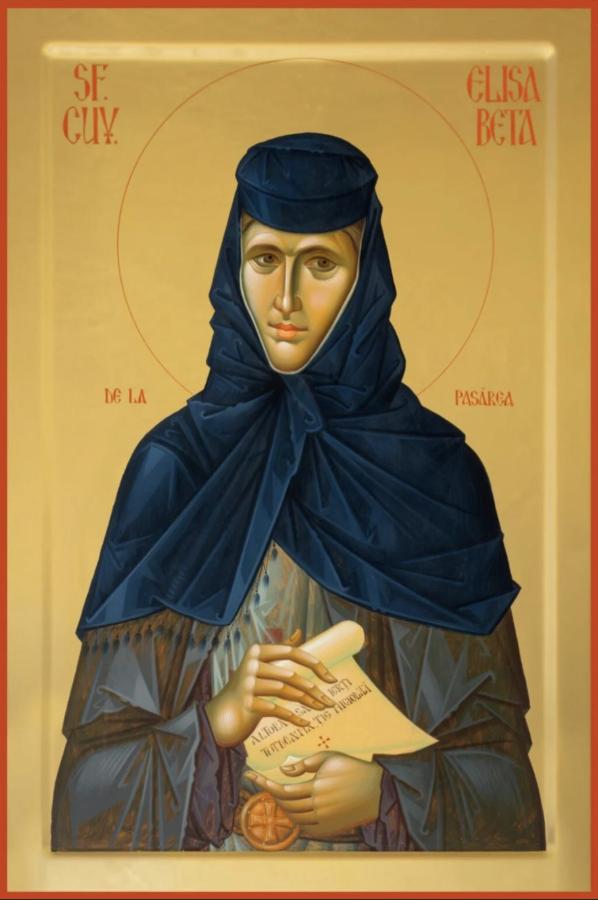
“I believe she is one of the greatest saints our Romanian people have brought forth, and I believe that this saint, although contemporary with us, reached the measure of holiness of the venerable ascetics of old,” proclaimed Răzvan Mihai Clipici at the canonization of Saint Elizabeth of Pasărea.
“Many miracles are known—both during her lifetime and after her repose—many healings, many remarkable events involving people who needed a word of blessing at a decisive moment in their lives.”
Born on 16 July 1970, Elizabeth (or Elisabeta) was one of eleven children, two of whom died in early childhood. Her parents would often take her and her siblings on pilgrimages together. In September 1986, at age 16, she entered Pasărea Monastery after a pilgrimage with two cousins. She became a novice in December of 1990, assigned to work in the Romanian Patriarchate’s metalwork workshop at Pasărea Monastery.
In 1996, she was transferred to the Romanian Settlement in Jerusalem, where she served as sacristan and chanter. During this time she became dangerously ill, and doctors gave her little hope of survival. Elisabeth prayed to Saint John Jacob of Neamț, and had a vision in which she received counsel from the Saint to follow him into a life of quietness in the wilderness. She returned to Romania, living as a hermit in the Giumalău Mountains and the Neamț Mountains. In 1998, on the Feast of the Transfiguration of the Lord, she received the lesser schema and the name Theodora, and on 19 April 2006, she received the great schema. During this time, it is not entirely known how she survived her time in the wilderness, only that she emerged from it radiating with the light of Christ.
“The face of Schema-nun Elisabeta (Lazăr) shines like the example and life of the hermits of old,” said Assistant Bishop Timotei of Prahova from the Archdiocese of Bucharest. “She urges each of us to value time and dedicate as much of it as possible to the Lord.”
In 2014, weakened by cancer, St. Elizabeth returned to Pasărea Monastery, where she continued in prayer until falling asleep in the Lord on 5 June 2014. We celebrate her feast day on this day, as well as during the Synaxis of the Holy Romanian Women, now to be celebrated on the third Sunday after the Resurrection of the Lord.
Holy Mother Elizabeth of Pasărea, pray to God for us!
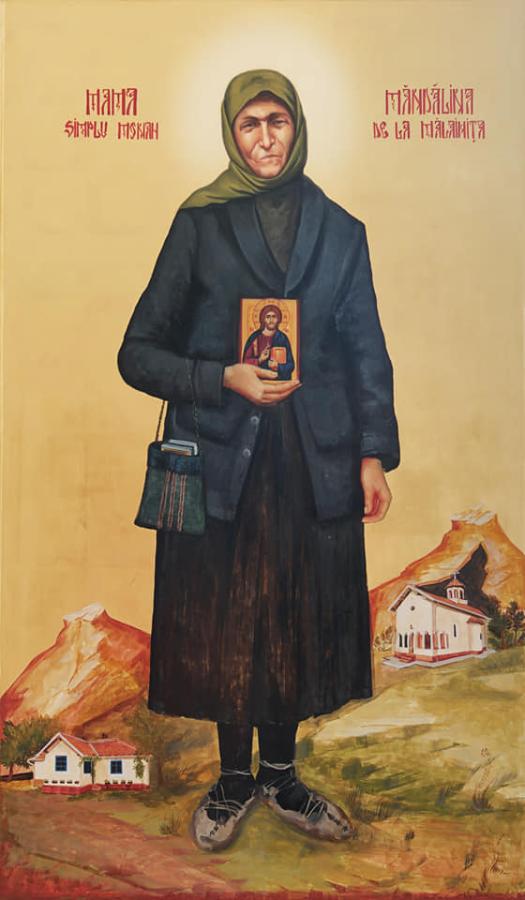
Măndălina Cătălinici was born in the village of Mălainița in Timoc in November 1895, one day after the feast of the Entry of the Virgin Mary into the Church (old calendar). Her father was of Serbian descent, and her mother was Romanian from a family that had come to the Timoc Valley from Transylvania. At her baptism on December 3/16, she was given the name Măndălina (Magdalena), which some took as a sign of her calling to a life of humility and service. She is still known today as "the old woman who sang with the priests."
From childhood she showed a love for prayer and the Church. She learned to read and write, which was unusual at that time, and was known for her wisdom and unshakable faith.
At the age of 19, on the Feast of the Presentation of the Lord, she was married to her husband, Miloș. Only a few years later, he was killed in World War I, leaving her a widow with a small child. During this crisis of her life, Saint Măndălina constantly repeated to herself, "God sees”. These words became the cry of her soul.
During the Bulgarian occupation (1915-1918), many priests were arrested and killed, and the church in Șciubic was left without anyone to lead the services. St. Măndălina stepped into the role of chanter, keeping the flame of faith alive in her community. Each day she walked in all weathers the 5 kilometers to the church to read and sing at services. The bishops even allowed her to enter the altar, something unusual for women at that time. Because she knew both Romanian and Serbian well, and could read and write, she became a bridge that kept their community of faith standing together in a dark and difficult time.
Although St. Măndălina never took vows, she lived as a monastic in the world, tending sheep to support herself. She explained the faith to those who needed guidance, saying each time, "God sees."
In October of 1962, St. Măndălina departed to the Lord. Her relics are now in the church of the monastery of Mălainița, where they are venerated with devotion. A monastery was also built on the spot where she used to graze her sheep and pray. She was canonized as a saint by the Holy Synod of the Romanian Orthodox Church on July 1, 2025 as “Saint Magdalene of Mălainița". Her feast day is on October 15.
Holy Mother Măndălina, pray to God for us!