Katherine Bolger Hyde, Woman of the Week
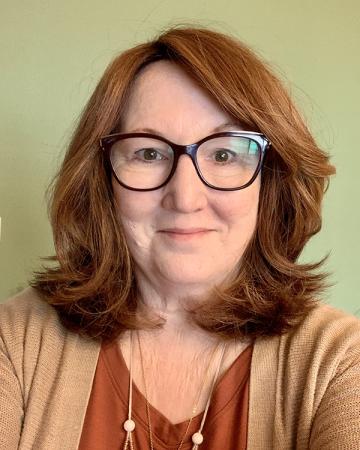
Katherine Bolger Hyde is our Woman of the Week, nominated for her work as an Orthodox author and editor. We asked her to tell us how she got from where she started to where she is today:
“The writing and the editing were two different trajectories. But they're both in my blood. My father spent his career as an editor. He always wanted to write a novel, but he never quite got there. I decided when I was eleven that I wanted to be a writer, specifically a novelist. It took me about thirty years to put that into practice, because of family and work and not believing in myself.
“Once I started writing seriously, it was ten years before I sold a book. I think this was mainly because I was writing books that neither the secular market nor the Christian market knew what to do with. I was too ‘Orthodox’ on both counts. (Three of the four books I wrote in those ten years have since been published.)
“I finally decided to try writing mysteries, since mysteries actually sell. I was halfway through Arsenic with Austen when I won a scholarship to a mystery writing conference. Part of the deal was that I got to meet with an agent. The agent I met loved my idea and wanted to see the book when it was done.
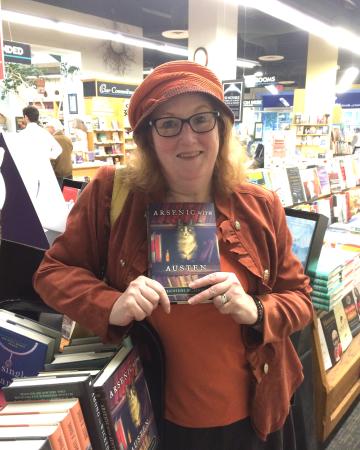
“This was in August. I sent the complete manuscript to her in November. She read it over Thanksgiving weekend and signed me immediately. It took until March to sell the book, which is pretty fast. So I refer to that as my ten-year overnight success story.
“Since then I have been publishing steadily in a variety of genres, including Orthodox children’s books. I've always stubbornly clung to the idea that I will write what I want to write and not what the market wants from me. It's gone fairly well, although I certainly have never come close to making a living by writing. Hence the other career, editing.
“As an editor, I started out at Thomas Nelson Publishers as a freelance proofreader and eventually was hired full-time as an editor. One of my projects there was the Orthodox Study Bible. In many ways this was a weird thing for Thomas Nelson to be doing, because they were basically an Evangelical publisher. But Father Peter Gillquist, who had worked there at one time, talked them into it. The head of the Bible department was also Orthodox, which helped.
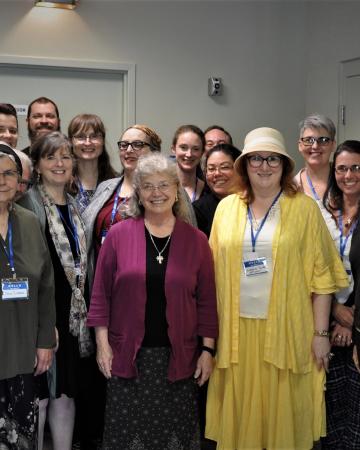
“After a couple of years at Nelson, I moved to California and started working for what was then Conciliar Press, which eventually merged with Ancient Faith Radio and became Ancient Faith Publishing. I spent the rest of my career there, helping to establish the high standards AFP is known for. I had the privilege of working with many of the most popular and respected Orthodox authors in North America. So I've been involved in Orthodox publishing for more or less my whole working life. I was always very happy and grateful to have a job where I could incorporate and honor my faith. There were a few short periods where I had to do some freelancing and ended up taking jobs that were in some way inimical to my faith, and it was extremely uncomfortable for me. I was very glad to get back to Orthodox editing.
“Now that I'm retired from Ancient Faith, I’m trying to devote more time to my own writing, and I also do some freelance editing and coaching. I've had some clients that I knew from Ancient Faith and some I've worked for in the past doing either editing or layout. I've also had several fiction editing clients that came out of the St. Basil Writers' Workshop, where I teach.
“All together, I have fifteen books published, with another one coming out in August—The Ghostwriter from Chrism Press. I'm also just finishing up a historical mystery set in 14th-century England and featuring Julian of Norwich. I hope that book will be the beginning of a series, and I'll be pitching it through my agent to secular publishers.
“I enjoy the work I do to help other authors succeed. It’s always good to see more Orthodox authors crawling out of the woodwork and trying to do something serious in the world.”
“The most important thing I'd like people to know about Orthodox fiction is that it's valid. Fiction is not something that Orthodox people need to shy away from. A lot of people seem to have the idea that fiction is pernicious because it’s related to fantasy and imagination. But when the Fathers talk about these subjects, they're really talking about spiritual things. They're not talking about what you read at all.
“And then there's also the idea that fiction is just frivolous. People believe it's fine for children, it can teach children, but it has nothing to say to adults. And that is just so, so wrong. It makes me hurt when I hear that attitude.
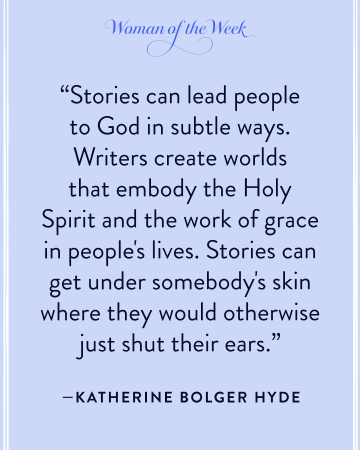
“Jesus used parables to help people understand the more difficult truths he had to convey. A story can do so much for us. It can help us empathize with people who are different from us, to realize that they're not as different from us as we think they are. It can actually lead people to God in subtle ways. We create these worlds that embody the Holy Spirit and the work of grace in people's lives. It can get under somebody's skin where they would otherwise just shut their ears.
“Tolkien used the word consolation to describe how good fiction feeds our spirits. I'm not going to make any defense of what used to be called ‘pulp fiction,’ fiction that is specifically written only to entertain people. But I don't know any Orthodox authors who are writing that kind of fiction. The ones I know are infusing so much depth and spiritual meaning into their work. It really is worthwhile, and the authors need your support. Tell publishers that you want to see more fiction available. They are more willing to take risks if they know the demand is there.
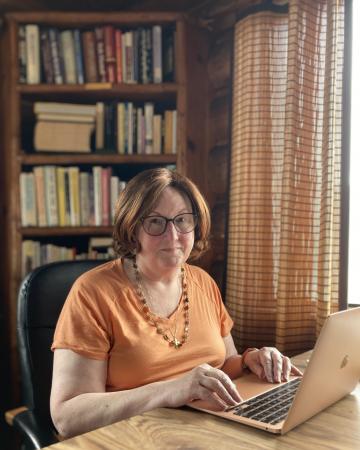
“Personally, I don’t usually intend to make my books ‘Orthodox,’ but I can’t help it—it comes out. However, the last book that I finished before I started this new mystery series was definitely going to be spiritually oriented from the start. It's called The Thin Place, set on the Isle of Mull, and it's about a woman who's experienced a lot of loss. She goes to Mull for reasons that have nothing to do with spirituality, and she's quite angry at God. But she falls in with a monk who is leading pilgrimages (who is very deliberately not based on Father Seraphim Aldea, by the way). She tags along on some of the pilgrimages, and God starts to work in her life. I knew from the beginning that this was going to be a story of healing that would be based in faith. But most of my stories have some other focus, and faith elements just kind of creep in.
“The other thing I’ll mention is that writing and editing are not as easy as they seem. Our tools are words, and everybody uses words. So some people don’t realize how much effort goes into making a book beautiful or successful. I think we all might need to appreciate a little more how much art is involved, both in writing and in editing. Neither of them is an easy occupation to learn. There are also not a lot of jobs, and they don't pay very well, so it’s something that you really need to feel a vocation for if you want to make it your life's work.”
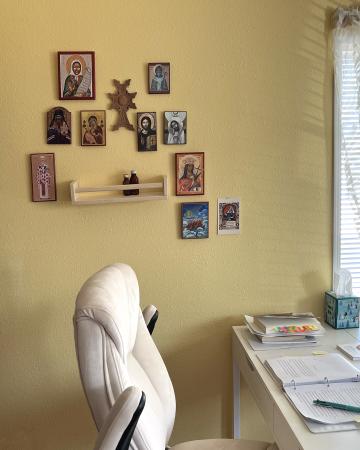
As always, we asked our Woman of the Week, Katherine Bolger Hyde, to tell us about her morning routine:
“My routine is not really exemplary because I have never managed to establish a consistent rule of morning prayer. I do pray at other times of the day, but somehow it rarely works for me in the morning. In a nutshell, my routine is this: I get up pretty early, usually earlier than I want to because the sun is up and I'm up. I have a cup of coffee, and I spend an hour or so playing New York Times games on my phone, trying to wake up my brain. Then I go to my writing desk. If I'm in the middle of a draft, I'll spend the next hour or hour and a half writing. If I'm in some other phase of a project, I might be planning, or researching, or editing. After that, I have breakfast, get dressed, and face the world.
“I have to have that creative time before the world intrudes too much. That's the only time that I am usually able to focus on writing. After that, I get on with my paid work and the tasks that relate to the business of writing. It can be hard to juggle. I've never figured out a way to say, ‘Okay, I'm going to spend these hours on this, and these hours on this,’ and make it work, because there are always meetings and whatnot which involve other people's schedules as well as my own. Most of the people I work with are in Eastern time zones, so it’s not always ideal. And of course personal and family obligations intrude as well. So that early morning writing time has to remain sacrosanct.”
Thank you, Katherine!