Meet Niki Devaris-Morgulis, Woman of the Week!
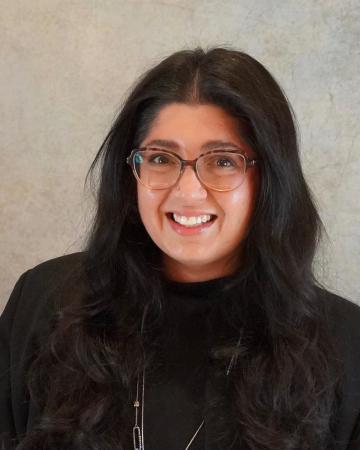
Niki Devaris-Morgulis is our Woman of the Week, nominated for her work in founding the Girl Delegate Program at the United Nations within the Greek Orthodox Archdiocese of America. We asked her to tell us how she got from where she started to where she is today:
“What started in 2022 as a small pilot program has grown into a national initiative, bringing girls from across the country into rooms where decisions are made, and giving them the confidence and responsibility to bring what they learn back home.
For Niki, the path to the United Nations wasn’t exactly a straight line.
“I studied religion as an undergraduate and then went to law school. But after earning my law degree, I didn’t want to start my career in a traditional legal job. Instead, I found myself drawn to the Church and I began working full-time in the Department of Inter-Orthodox, Ecumenical, and Interfaith Relations at the Greek Orthodox Archdiocese of America. I found this space where I could be within my church, so I felt at home: not practicing in the traditional sense, but utilizing the skills I learned through law school in a space of advocacy and international relations, both interfaith and inter-Orthodox. The role was a natural step for me, and I loved it. That is where I first developed the idea for the Girl Delegate Program.
“As part of my work with the Archdiocese, I was involved with its role within the United Nations. I began noticing that there was a growing interest at the UN in hearing from young people and creating space for their the voices.
And I knew that the Archdiocese had something unusual: access.
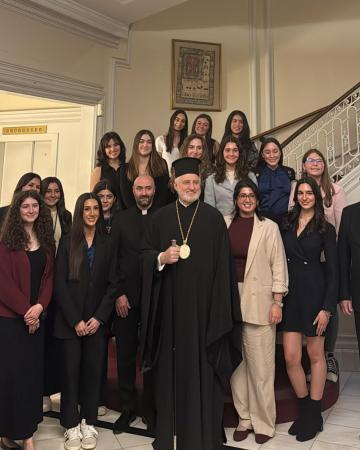
As the Greek Orthodox Archdiocese of America, we are able to enter the building and to participate in conferences in ways that the normal public is not able to do. So I started reflecting on what I was seeing, and the access that we had, and thinking, ‘Why not share this with our people? This shouldn't be an exclusive door in that kind of way.’
Then I began looking at that access through another lens, not simply as a representative of the Archdiocese, but as a young woman myself.
There was always this constant question about the role of women, the role of girls: ‘How are we responding? How is the Archdiocese responding to that?’
The answer, I thought, could be a program that brought young women directly into the conversation.
So we presented the idea to His Eminence, who immediately supported it.
“It was really incredible to have his support.
The Girl Delegate Program launched as a pilot in 2022. At first, it was intentionally small: a group of girls from the New York, New Jersey, and Connecticut area. But the vision was always bigger.
After several years in the pilot phase, the program expanded nationally. Today, delegates participate from across the United States, from Oklahoma, California, Utah, and beyond. We meet virtually and in person, and they are the representation of the Greek Orthodox Archdiocese of America at the United Nations.
“I still get chills thinking about how incredible our timeline has been and how far we’ve come. I'm so proud of the girls. They represent us so well.
And it is not just a symbolic role. The girls help shape the Archdiocese’s advocacy work by choosing the issues they care about and bringing their own perspectives to the table.
They're so articulate. Our girls are such an asset, and to be able to utilize their talents on this international stage is mind-blowing for me.
This program is also evidence that the Archdiocese’s commitment to putting young people first.
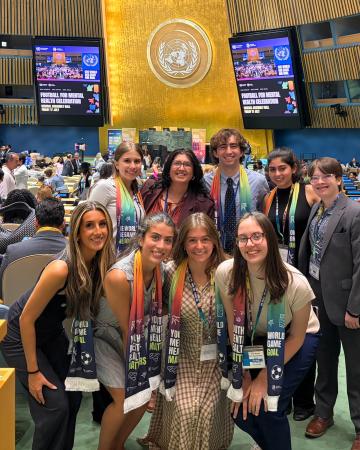
The girls do more than bring their faith into their advocacy at the UN. They bring what they learn back into their communities. Our faith values remain at the center of the program, but the girls’ ideas and interests are what guide its direction.
The girls themselves helped me create the program that it is today.
Their success is not only within the program and within the UN – they would take things that they learned through the program back to their parishes. Some of the most meaningful moments happen after the girls leave New York.
One delegate who participated in the pilot program was interested in environmental advocacy and helped launch a Green GOYA (Greek Orthodox Youth Association) Initiative. After working on the issue at the UN level, she brought the idea to her GOYA advisors, gave a presentation, and helped get the program off the ground. They launched the program, with her at the helm, and it continued for many years, which was really beautiful to see.
“Another delegate from Utah, took a similar approach. After attending the Commission on the Status of Women, she returned home and began presenting what she had learned at her local schools. She felt that since she had this access, and was in the room during the meetings, she had the responsibility to take that back to them, so that they too can have the access through her. This is a perfect example of what the program can accomplish.
There is another delegate from Oklahoma, who is using the connections she made through the program as the foundation for her Girl Scout Gold Award. She herself says she never thought she would be able to have these kinds of conversations internationally and nationally with girls from her own faith, and internationally, with girls of all different faiths.
Despite being the person who created the program, Niki is quick to redirect the spotlight back to the girls.
“I feel as though I'm simply the facilitator for their goals and their achievements. I draw on my connections within the UN network to arrange meetings with ambassadors and representatives of UN member states. I hold training sessions and simulations so the delegates can practice speaking in unfamiliar settings and learn how to feel comfortable asking questions and expressing their ideas.
The goal is simple. When the girls enter a room, whether in person or on Zoom, they should feel that they belong there.
The program deadline just ended and we are currently reviewing the applications with a committee. The applications are reviewed blindly, an intentional choice designed to make sure geography does not determine who gets an opportunity.
“I want to make sure that we reach everyone equally, not just the people based in New York or on the East Coast.
That’s the point of this: we want to make sure that the representation of the girls at the UN represents our Archdiocese, and that means from everywhere in the United States.”
“I want people to know that there is a space for girls, and girls should be empowered to take leadership positions: within this program, but also within their local community, their metropolis, and their archdiocese. The Church is for them, just as much as it is for anybody else, and I don't think anyone should lose sight of that.
"That belief is at the heart of the program.
"Giving girls their own space to lead is something the Archdiocese has never done in quite this way before. At the UN, the delegates advocate not only for themselves, but for girls and women around the world. And when they return to their communities, I hope they carry that same confidence with them.
"They should also be empowered to step up and say, ‘I would like to see this in my local community. I would like to step into this role.’ And so the leadership continues.
“I grew up in New Jersey attending St. Athanasios and Paramus and St. Nicholas in Wyckoff throughout my childhood. Church always felt like home. I always felt that I could walk in the door and I belonged there.
"But I recognize that not every girl necessarily grows up with that same feeling. I know I'm very fortunate. I know that perhaps not all girls felt that they could simply talk to their parish priest and say, ‘I'd like to see this. Is that something we could do?’
“I always felt like I could. And that experience has shaped what I hope to create for the next generation.
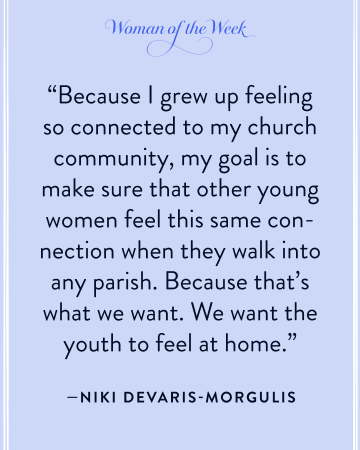
"Because I grew up feeling so connected to my church community, part of my goal is to make sure that girls feel that way when they go ‘home’ and when they walk into any parish.
"Because that's what we want. We want the youth to feel at home.
"I want girls to be empowered in their church, in their home, so that when they go out into the world, they know that they have the support of their community behind them.
"There is room for them. Room for their leadership. Room for their questions. And perhaps most importantly, room for their ideas.
“There is space for them, there is space for their ideas, and they have really, really good ones.”
As always, we asked our Woman of the Week, Nikole Devaris-Morgulis, to tell us her morning routine:
“Okay, so my morning routine is a little crazy. I have a 10-month-old, so morning means playtime, rush, rush, rush, and then head to work.
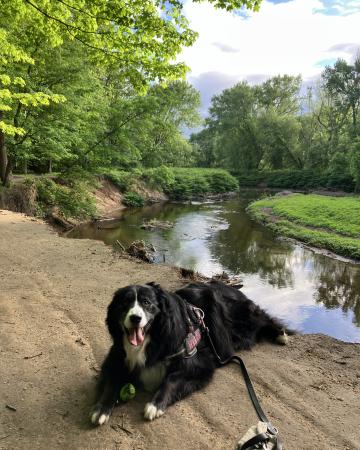
“Typically my babe wakes me up. We play, I change his diaper, I pump, I brush my teeth while I'm pumping, and try and get ready. Then I take the dog for a walk. When I get home with the dog, I get my bag ready, and then I head out.
“I have to come into the office every day, and it is about 30 minutes from where I live, so I hop on the subway, and head downtown. If you asked me a year ago what my morning routine was like, it was a little more relaxed. Now, every day seems to bring something new. But it's incredible to see him grow, and it's such a joy to be his mom. I'm also incredibly grateful for my mother. Ever since he was born, she’s helped out and been very hands on, and I am so grateful to have her support.”
Thank you, Niki!